


Quimat USB Arcade Encoder QR05 - Zero Delay Joystick for Mame Jamma Fighting Games - Blue-1
Quimat USB Arcade Encoder QR05 - Zero Delay Joystick for Mame Jamma Fighting Games - Blue-1
Out of stock
Couldn't load pickup availability
Guarantee safe checkout

Sold by Gamex24, an authorized reseller.
Returns accepted within 30 days | support@gamex24.com
Shipping Information
- Free Standard Shipping — United States only
- Processing Time: 1–3 business days
- Estimated Delivery: 3–5 business days after dispatch
- Securely packed to ensure your purchase arrives in perfect condition
- Tracking number sent via email once dispatched
- Orders over $250 require signature upon delivery. Taxes calculated at checkout.
Returns & Refund
Returns accepted within 30 days of delivery.
Damaged or Defective Item
Free return shipping + replacement or full refund
Wrong Item Received
Free return shipping + replacement or full refund
Change of Mind
Return shipping at customer's expense · Item must be unused & in original packaging
Safety & Compliance
California Proposition 65 Warning
Some products sold on this website may expose you to chemicals known to the State of California to cause cancer, birth defects, or other reproductive harm.
www.P65Warnings.ca.govGeneral Product Safety Advisory
Always read the product label, instructions, and safety warnings before use. Do not use damaged or modified products. Store products in appropriate conditions as specified by the manufacturer.
Keep all products out of reach of children unless specifically designed for their use.
Product Authenticity & Notice
All products sold by Gamex24 are 100% authentic, sourced directly from authorized brand distributors. Product colors and dimensions may vary slightly from images due to screen calibration and manufacturing tolerances.
Gamex24 — Play. Compete. Repeat.


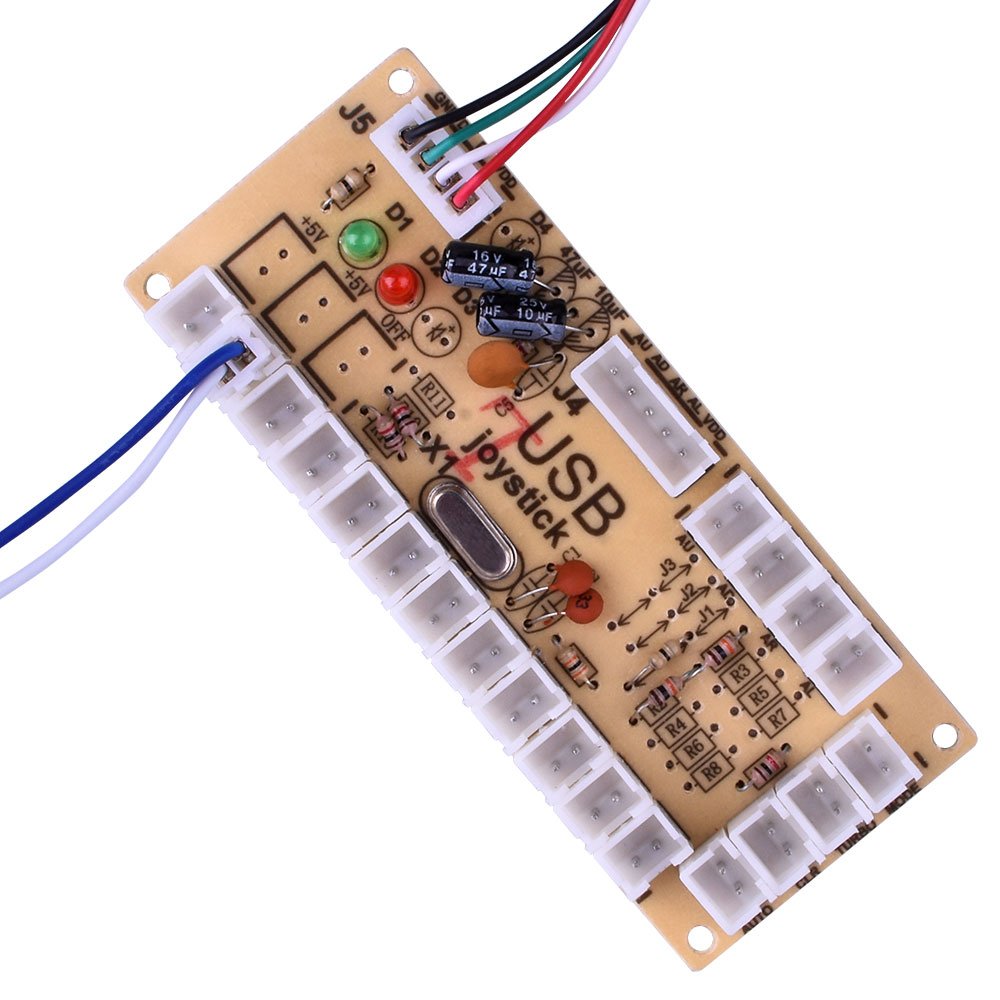
Description
Frequently Asked Questions
- Q: What are the dimensions of the AUKUYEE Quimat Zero Delay Arcade USB Encoder? A: The dimensions are zero point five one inches in length, zero point one two inches in width, and zero point one two inches in height.
- Q: What material is the AUKUYEE Quimat USB Encoder made from? A: The specific material is not provided, but it is designed for durability in arcade setups.
- Q: What category does the AUKUYEE Quimat USB Encoder fall under? A: It falls under the Joysticks category, making it suitable for arcade gaming setups.
- Q: How do I set up the AUKUYEE Quimat USB Encoder for my arcade machine? A: Just connect it to your push buttons and joystick; the installation is designed to be easy.
- Q: Is the AUKUYEE Quimat USB Encoder compatible with all operating systems? A: Yes, it supports all Windows systems and Raspberry Pi Retropie projects.
- Q: Can I use any joystick with the AUKUYEE Quimat USB Encoder? A: Yes, it supports all joystick and push button types with four point eight millimeter terminals.
- Q: How do I maintain the AUKUYEE Quimat USB Encoder? A: Keep it clean by avoiding moisture and storing it in a dry place to ensure longevity.
- Q: Is the AUKUYEE Quimat USB Encoder safe to use? A: Yes, it is designed for safe operation within arcade gaming systems.
- Q: What is the warranty policy for the AUKUYEE Quimat USB Encoder? A: Specific warranty details are not provided, but check with the manufacturer for support.
- Q: What if the AUKUYEE Quimat USB Encoder arrives damaged? A: You should contact the seller immediately to initiate a return or exchange.
- Q: Is the AUKUYEE Quimat USB Encoder suitable for beginners? A: Yes, its easy installation makes it ideal for beginners looking to build arcade machines.
- Q: Can I use the AUKUYEE Quimat USB Encoder for DIY projects? A: Yes, it is specifically designed for DIY arcade game machine projects.
- Q: Does the AUKUYEE Quimat USB Encoder require special tools for installation? A: No, it is designed for easy installation without the need for special tools.
- Q: What types of games can I play with the AUKUYEE Quimat USB Encoder? A: It is suitable for Mame Jamma and other PC fighting games.
- Q: What is the brand of the AUKUYEE Quimat USB Encoder? A: The brand is Quimat, manufactured by AUKUYEE.